
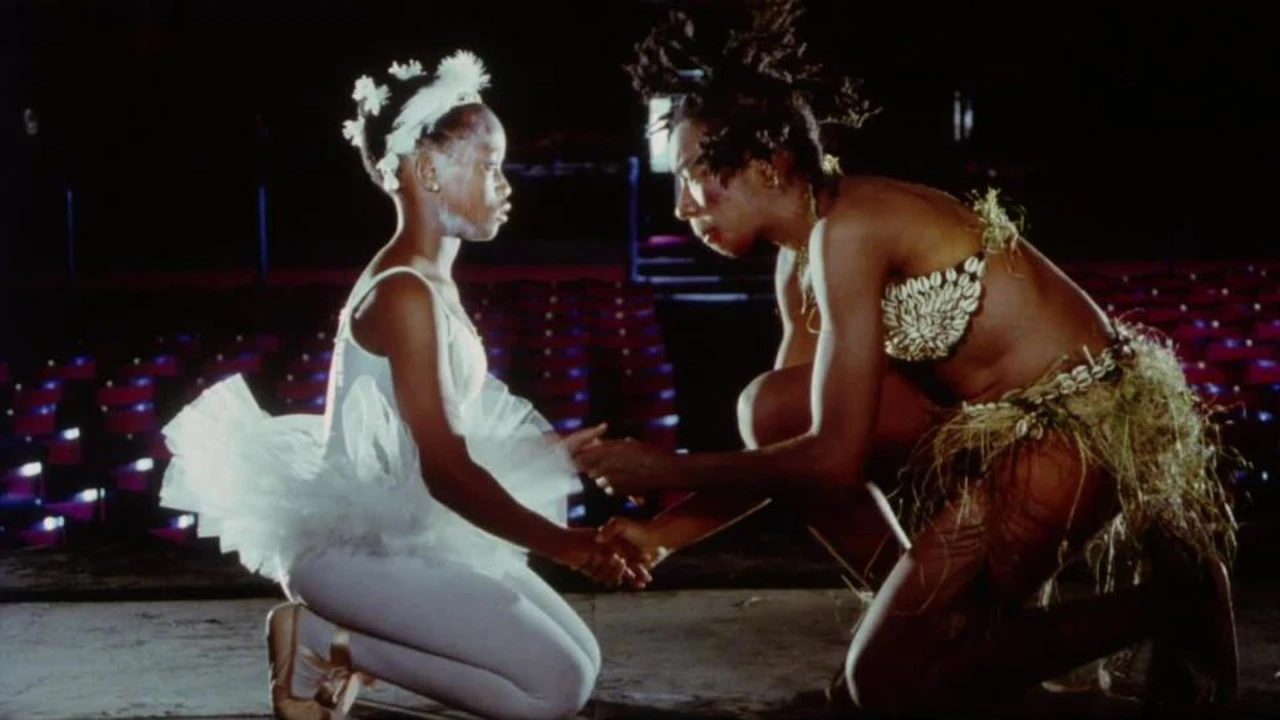
Released in 1992, Ngozi Onwurah’s short film ‘Flight of the Swan’ beautifully discusses the issues of Blackness, femininity, culture, and identity in just eleven minutes. The film comprises a young, Black ballerina named Obe vying for her dream role in a Swan Lake production against her prejudiced white peers. After working hard to recieve the role of Princess Odette, the role ends up going to another ballerina and the film concludes with her embracing her identity through traditional dance with an African Spirit, likely her imaginary friend.
To understand the symbolism behind the film, the history of ballet and Swan Lake must also be understood. The art of ballet has historically been a field characterized by exclusion of people of color, with Black dancers not appearing in performances until the early-mid 20th century in Britain. This legacy is prominent in the film, where the girls in Obe’s class laugh at the idea of a “black swan” playing Princess Odette, the traditional white swan.
One quote from the Melbourne International Film Festival website describes this perfectly.
Slowly she realises she must dance with her African spirit and not against it.
Part of Obe’s conflict in the movie was her desire to fit in with her peers and British society by pursuing this role in the Swan Lake, which was a goal she needed to repress her culture and identity to achieve. Despite her attempts to fit in with ballet, Obe receives a racist mammy doll in her bag from a classmate to discourage her. Obe’s rejection from prejudiced environments pushes her to embrace what she was running away from all along at the end.
The African Spirit was my favorite element of the film as it really resonated with me as a Black former ballerina who often also felt out of place in similar environments. The African Spirit, played by Wunmi Olaiya, embraces traditional Nigerian culture and dance, and is consistenly depicted as being happy and smiling even when shes in the same predominently white spaces that Obe is in.
The film also seems to be ahead of its time. At the time, many movies surrounding black identity were very narrowly focused on the struggles resulting from systemic racism, not helping the perception that Black identity was strictly tied to struggle. In Flight of the Swan, while Obe faces the very real force of racism in her life, the story evidently has much more to do with assimilation and Obe leaving her home in Nigeria to seek places with closer proximity to whiteness.


